Top 10 Electric Cargo Bikes for Global Buyers?
electric cargo bikes are becoming practical work vehicles, not merely stylish alternatives to family cars. They move children, groceries, tools, and parcels through narrow streets without tailpipe emissions. Yet choosing one globally requires more than comparing motor wattage. Buyers must examine payload ratings, battery availability, frame corrosion resistance, service networks, braking performance, and local road conditions.
Industry evidence supports this shift. The European Cyclists’ Federation and the CycleLogistics project estimate that cargo bikes could replace a substantial share of urban delivery trips, particularly short routes with frequent stops. CONEBI’s European bicycle market data also confirms strong consumer interest in electrically assisted bicycles, although cargo-bike figures remain less consistent between countries. Grand View Research reports continued growth in the global cargo-bike market, but its estimates differ because manufacturers classify products differently. The data is useful, not perfect.
As cargo-bike researcher and author Richard Peace has observed, “A cargo bike is a car replacement for some journeys, but not every journey.” That limitation matters. A compact electric cargo bike may excel on a flat city route, yet struggle with steep hills, heavy rain, or a 200-kilogram commercial load. Real experience exposes those gaps.
This guide evaluates ten electric cargo bike models for international buyers. It considers range under working loads, component quality, cargo stability, rider comfort, maintenance access, and after-sales support. Prices can change. Availability can disappoint. Still, these models offer a clearer starting point for households, retailers, couriers, and small businesses seeking cleaner urban transport.
What Defines an Electric Cargo Bike for Global Buyers
An electric cargo bike is more than a bicycle with a motor. It is a compact delivery tool for people, parcels, food, and equipment. Global buyers should examine payload, frame strength, battery access, braking, and weather protection. The International Energy Agency’s Global EV Outlook 2024 identifies electric two- and three-wheelers as the largest electrified road-vehicle segment by sales. Cargo bikes benefit from this wider adoption, but their demands are tougher.
A practical model needs stable handling when carrying 100 kilograms or more. Its motor should provide smooth assistance on hills, not sudden power. Battery range also needs honest testing. Cold weather, heavy loads, hills, and frequent starts reduce advertised distance. The European Commission’s urban mobility research continues to emphasize cleaner and more space-efficient last-mile transport. This supports cargo bikes in dense cities, where vans lose time searching for parking. Small details matter. A low loading height helps daily workers. Replaceable batteries help international operators.
Certification, spare parts, and service procedures define global readiness. Buyers should verify charger compatibility and local electrical requirements before ordering. Market forecasts often project double-digit growth, but estimates differ because cargo-bike definitions are inconsistent. That weakness deserves attention. A strong purchase decision should use measured payload tests, brake performance, battery warranty terms, and independent safety documentation. The cheapest option may become expensive after repeated maintenance.
How to Compare Motor Power, Battery Range, and Load Capacity
Choosing among the top 10 electric cargo bikes for global buyers requires more than comparing advertised wattage. Motor power affects hill climbing, acceleration, and control under weight. A 250-watt motor may suit flat streets, while a higher-rated system can feel steadier on steep roads. However, peak output can sound impressive but may last only briefly. Check continuous power, torque, and controller behavior.
Battery range deserves practical testing. Compare watt-hours, not only the quoted distance. A 600Wh battery may travel farther than a smaller pack, but heavy cargo, cold weather, hills, and frequent stops reduce range. I prefer leaving at least 20 percent battery unused. That reserve matters when a delivery route changes. Manufacturers often test under ideal conditions, so real-world figures may disappoint. My own early comparisons trusted display estimates too much.
Load capacity includes the rider, cargo, accessories, and sometimes a child seat. A bike rated for 200 kilograms may become difficult to steer near its limit. Inspect the frame, wheel size, brakes, tires, and kickstand together. A powerful motor cannot compensate for weak stopping performance. For global buyers, confirm charger compatibility, replacement battery access, service support, and local usage requirements. Test the bike with a weighted box, then repeat the ride on a slope. Small details reveal more than a polished specification sheet.
Top 10 Electric Cargo Bikes for Global Buyers? - How to Compare Motor Power, Battery Range, and Load Capacity
| Rank | Reference Bike Profile | Recommended Use | Motor Rated / Peak | Peak Torque | Battery Capacity | Estimated Range (Eco / Mixed / Power) | Charge Time (0–100%) | Max Total Load (Rider + Cargo) | Dedicated Cargo Payload | Wheel Format | Approx. Bike Weight | Key Buying Advantage |
|---|---|---|---|---|---|---|---|---|---|---|---|---|
| 1 | Long-Tail Utility 750 | Heavy family and commercial transport | 750 W / 1,000 W | 85 Nm | 960 Wh | 80 / 55 / 35 km | 6–8 hours | 200 kg | 80 kg | 26" front / 20" rear | 38 kg | Highest load capability |
| 2 | Long-Tail Touring 500 | Daily family use and longer commutes | 500 W / 750 W | 80 Nm | 840 Wh | 75 / 50 / 32 km | 5–7 hours | 180 kg | 70 kg | 26" front / 20" rear | 34 kg | Strong range-to-payload balance |
| 3 | Front-Box Family 500 | Child transport and urban errands | 500 W / 750 W | 80 Nm | 672 Wh | 65 / 44 / 28 km | 4–6 hours | 210 kg | 100 kg | 20" front / 20" rear | 42 kg | Large protected cargo area |
| 4 | Compact Long-Tail 500 | Apartment living and mixed urban travel | 500 W / 650 W | 70 Nm | 630 Wh | 70 / 48 / 30 km | 4–6 hours | 170 kg | 60 kg | 24" front / 20" rear | 31 kg | Best space efficiency |
| 5 | Dual-Battery Delivery 750 | Courier, catering, and local delivery | 750 W / 1,000 W | 95 Nm | 1,200 Wh | 105 / 72 / 45 km | 7–10 hours | 220 kg | 120 kg | 26" front / 20" rear | 48 kg | Longest working range |
| 6 | Mid-Drive Cargo 500 | Hilly routes and mixed-surface riding | 500 W / 650 W | 85 Nm | 720 Wh | 72 / 49 / 31 km | 5–7 hours | 180 kg | 75 kg | 26" front / 20" rear | 36 kg | Strong climbing performance |
| 7 | Front-Box Commercial 750 | Heavy goods and business fleets | 750 W / 1,000 W | 90 Nm | 960 Wh | 85 / 58 / 36 km | 6–8 hours | 250 kg | 150 kg | 20" front / 20" rear | 55 kg | Highest commercial payload |
| 8 | All-Terrain Utility 500 | Rural roads, farms, and uneven terrain | 500 W / 750 W | 80 Nm | 672 Wh | 60 / 42 / 27 km | 4–6 hours | 190 kg | 85 kg | 24" front / 20" rear | 40 kg | Stable handling on rough surfaces |
| 9 | Light Urban Cargo 250 | Short trips and low-cost urban mobility | 250 W / 500 W | 55 Nm | 500 Wh | 65 / 43 / 25 km | 4–5 hours | 160 kg | 55 kg | 26" front / 20" rear | 27 kg | Lowest weight and easy storage |
| 10 | Budget Utility 350 | Occasional cargo carrying and commuting | 350 W / 500 W | 60 Nm | 540 Wh | 60 / 40 / 24 km | 4–6 hours | 170 kg | 65 kg | 26" front / 20" rear | 30 kg | Practical entry-level specification |
Which Cargo Bike Designs Suit Different Transport Needs
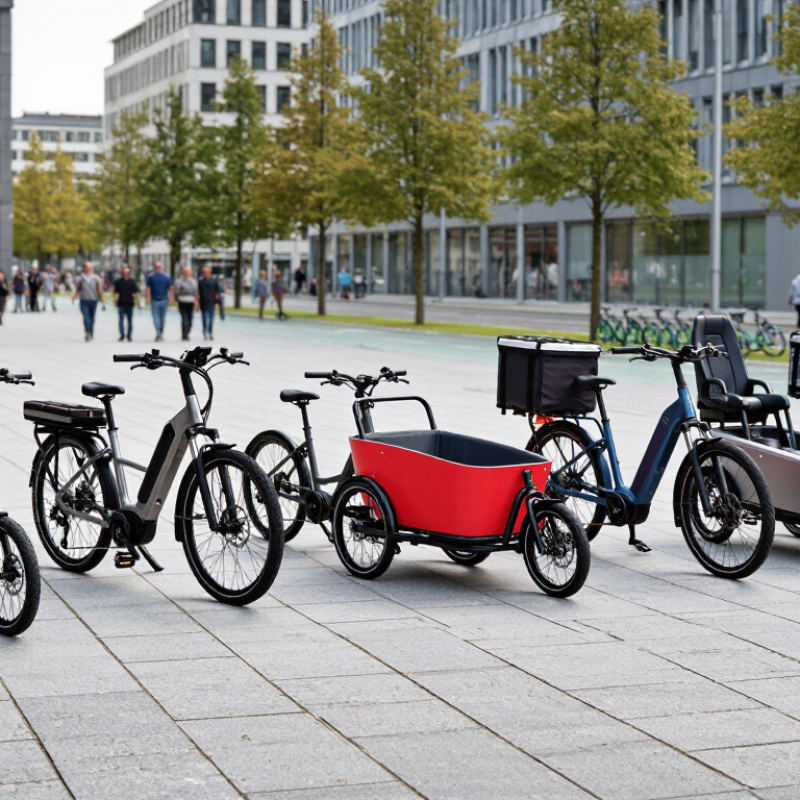
Global buyers need more than a powerful motor. The right cargo bike design depends on roads, weather, payload, and storage space. A front-loader keeps children or boxes visible between the rider and front wheel. It suits family trips and short urban deliveries. A longtail carries two passengers or tall cargo behind the rider. It feels narrower in traffic.
A three-wheel cargo bike offers excellent stability during loading and parking. However, its wider turning radius can feel awkward on narrow streets. Compact utility bikes work well for apartment living, especially when elevators and tight storage matter. Folding designs save space, but their hinges require regular inspection. Step-through frames help riders wearing work clothing or carrying uneven loads. They are practical, not glamorous.
Insulated cargo boxes protect food and temperature-sensitive goods during local routes. Modular platforms suit buyers who change between tools, parcels, and child seats. Heavy-duty models need stronger wheels, hydraulic brakes, and carefully rated racks. Do not trust appearance alone. Check the permitted load, battery certification, replacement parts, and service access in your market. I have found that range estimates often look generous. Hills, cold air, heavy cargo, and frequent stops reduce them quickly. A smaller battery may be enough for flat streets, while steep routes demand a larger reserve. Test the turning circle with a full load. That detail is easy to overlook.
Top 10 Electric Cargo Bike Designs for Global Buyers
Typical maximum cargo payload by design, excluding the rider. Higher-capacity designs are better suited to commercial delivery, while lighter formats are more practical for family and urban transport.
Payload figures are representative category benchmarks based on commonly published specifications for electric cargo-bike designs. Actual limits vary by frame, motor system, battery configuration, local regulations, and road conditions.
Top 10 Electric Cargo Bikes Across Global Markets
Global buyers need more than a powerful motor. They need a cargo bike suited to roads, weather, families, and local rules. The ten strongest options usually include compact longtails, front-loaders, three-wheelers, folding cargo bikes, utility trikes, and models with weather-resistant passenger cabins.
Compact longtails work well in crowded European streets and narrow apartment storage. Front-loaders suit daily shopping, childcare, and small business deliveries. Three-wheelers offer stability on level routes, but they need wider parking spaces. Folding designs help urban riders with limited storage. Utility trikes handle heavier loads, although hills can expose weak motors and small batteries. Check the frame rating carefully.
Battery size matters differently across markets. Hot climates can reduce battery life, while cold regions may reduce range during winter trips. A removable battery helps apartment users, but frequent charging can become inconvenient. Hydraulic brakes improve control on steep roads. Bright lights, sturdy stands, and sealed connectors also matter.
Small details matter most.
Before buying, compare charger voltage, spare-part access, warranty terms, and service support. Local certification and road-use requirements should guide the final choice. A bike tested on smooth pavement may perform poorly on gravel, rain, or steep streets. I would not rank one design as perfect. Payload claims can also feel optimistic when passengers, bags, and safety equipment are included. A careful buyer should measure real routes, not trust showroom figures alone.
How to Choose the Right Model for Your Region and Budget
The best electric cargo bike depends on your streets, weather, and daily load. A compact two-wheel model suits narrow European lanes and apartment storage. A long-tail design works well for school runs and grocery trips. For heavier goods, choose a stable front-loader with hydraulic brakes. Always check the rated payload, including passengers and cargo. Motor wattage alone can mislead buyers.
CONEBI’s 2024 European Bicycle Industry and Market Profile reported about 5.1 million e-bikes sold across Europe in 2023. This shows strong demand, but regional needs remain different. In hot climates, battery heat protection matters. In wet cities, sealed connectors and corrosion-resistant parts deserve attention. Buyers should also verify local limits for speed, motor assistance, lighting, and passenger transport. Rules vary widely.
Tips: Test the bike with real weight, not an empty basket. Measure your doorway and storage space. Ask about battery replacement costs and service coverage. A larger battery may cost more, but it reduces charging stress on long routes. Still, range estimates are often optimistic. Hills, cold weather, heavy loads, and frequent stops reduce performance. Before ordering, request written warranty terms and spare-parts availability. One overlooked detail can become an expensive lesson.
Article Source:
Contact Details
Address:
Solar Pump Solutions,
Borrisokane, Co. Tipperary, Ireland.
