China Top 10 Oil Tank Manufacturers for Global Buyers
China’s Oil Tank manufacturing sector is becoming more important for global buyers. Demand is expanding, but procurement decisions are becoming less simple. Tank design must match crude oil, refined products, chemicals, temperature, and site conditions.
The International Energy Agency’s Oil 2024 report projects global oil demand will reach 105.4 million barrels per day by 2030. OPEC’s World Oil Outlook 2024 presents a higher long-term scenario, reaching about 116 million barrels per day by 2035. These different forecasts matter. They show why storage capacity, safety margins, and future adaptability deserve careful attention.
The Oil Tank is not merely a large steel container. Plate quality, welding control, corrosion protection, floating-roof performance, and inspection records can influence years of operating reliability. API 650 supports aboveground welded storage tank design, while API 653 guides inspection and repair practices. Buyers should also review project-specific fire protection, environmental, and pressure requirements.
Fatih Birol, Executive Director of the IEA and a leading global energy expert, stated: “The age of seemingly uninterruptible growth in global oil demand is drawing to a close.” This warning does not make storage irrelevant. It makes flexible storage more valuable.
China offers scale, engineering capability, and competitive manufacturing. Yet quality varies.
A low price proves little.
This guide examines ten leading Chinese Oil Tank manufacturers for international buyers. It considers manufacturing experience, technical documentation, certifications, customization, delivery performance, and after-sales support. No ranking fits every project. That limitation matters. The strongest supplier depends on product characteristics, location, standards, budget, and the buyer’s risk tolerance. Industry reports: IEA Oil 2024; OPEC World Oil Outlook 2024; API 650; API 653.
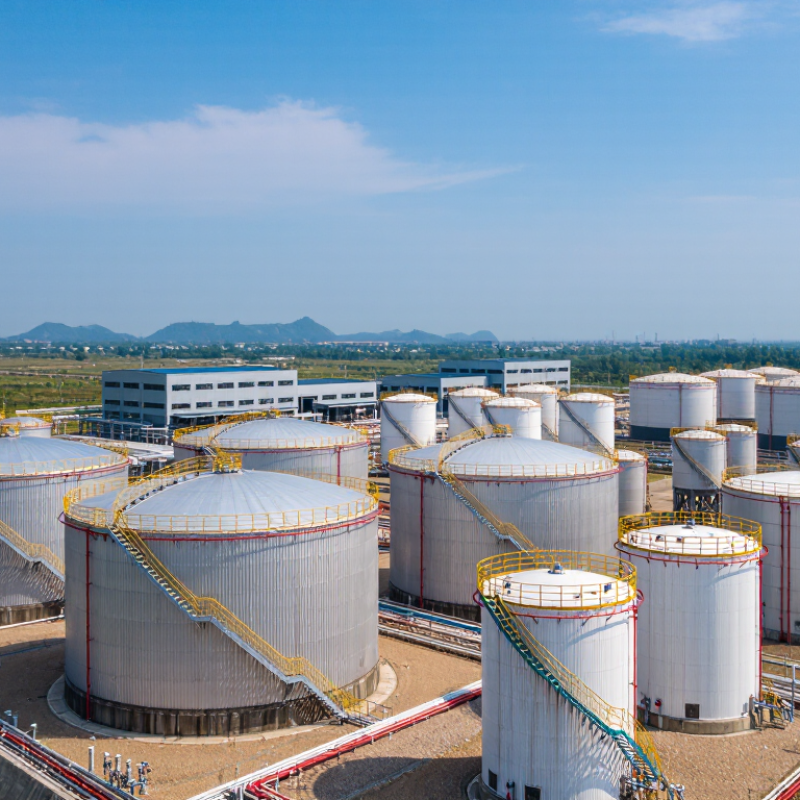
China’s Oil Tank Manufacturing Industry and Global Market Role
China Top 10 Oil Tank Manufacturers for Global Buyers
China’s Oil Tank Manufacturing Industry and Global Market Role
China’s oil tank manufacturing industry has become an important part of global industrial equipment supply. Its strength comes from broad metalworking capacity, competitive production costs, and access to mature port networks. Manufacturers commonly produce fixed-roof tanks, floating-roof tanks, and customized storage systems for fuel, chemicals, and other approved industrial liquids.
Experienced buyers should examine more than price. A reliable factory should provide material certificates, welding procedures, dimensional records, and pressure or hydrostatic test results. Depending on the project, tanks may need to follow API 650, EN 14015, ISO, or local regulations. Coating quality also matters. A poorly prepared surface can show rust around weld seams within months. That detail is easy to overlook.
The leading manufacturers usually support engineering drawings, foundation data, loading plans, and export documentation. Some can arrange modular fabrication, which reduces site work and shipping complexity. However, quality is not perfectly consistent across the market. Communication gaps may affect revisions, and inspection documents sometimes require careful verification. Independent inspection before shipment remains practical, especially for large tanks with complex fittings. Buyers should also review spare parts access, installation guidance, warranty terms, and local compliance requirements before signing a contract. The cheapest quotation can become expensive after delivery.
Key Criteria for Evaluating Chinese Oil Tank Manufacturers
China Top 10 Oil Tank Manufacturers for Global Buyers
Evaluating Chinese oil tank manufacturers requires more than comparing prices and steel thickness. The IEA Oil 2024 report projects global oil demand will reach 105.4 million barrels per day by 2030. This outlook increases pressure on storage capacity, inspection quality, and delivery reliability. Buyers should verify whether manufacturers design tanks under API 650, EN 14015, or equivalent technical standards. Certificates alone are not enough. Check their issuing bodies, validity dates, and covered production sites.
Material traceability is a practical test. Ask for heat numbers, mill certificates, welding procedures, and non-destructive testing records. A reliable manufacturer should provide radiographic or ultrasonic inspection results for critical welds. Coating performance also deserves attention, especially in coastal warehouses. The ISO 12944 corrosion classification system helps buyers match coatings with real exposure conditions. Small details matter.
Supplier experience must be measurable. Review completed projects, tank capacities, site conditions, and documented leakage rates. Request factory audit access, dimensional inspection reports, and pressure or vacuum test procedures. The World Steel Association reported global crude steel production at approximately 1.89 billion tonnes in 2023, showing the scale of available material, but not its quality. I would not treat production volume as proof of engineering ability. Some brochures look convincing. Factory records are harder to fake. Also examine spare-part support, installation guidance, response times, and warranty exclusions before signing.
Profiles of China’s Top 10 Oil Tank Manufacturers
China’s top ten oil tank manufacturers serve different operating needs, climates, and project sizes.
The first focuses on large welded storage tanks for refineries and terminals. Its strengths include plate forming, automated welding, and on-site installation support.
The second builds road tankers with compartmented interiors and reinforced frames. Buyers should inspect axle limits and cleaning access carefully.
The third specializes in stainless steel tanks for edible oils and sensitive industrial fluids. It emphasizes smooth weld finishing and controlled surface treatment.
The fourth produces double-wall tanks for fuel stations and commercial sites. Leak detection options deserve close review.
The fifth supplies underground tanks, often with corrosion-resistant coatings and lifting points. Site soil conditions still require independent engineering.
The sixth makes modular bolted tanks for faster assembly. Its systems suit remote projects, although seal maintenance can be demanding.
The seventh combines tank fabrication with piping, pumps, and transfer skids. This can reduce coordination between contractors.
The eighth handles customized tanks for unusual capacities, heating needs, or limited factory access. Engineering drawings must be checked before production.
The ninth targets export projects and supports packing, documentation, and container loading. Experience helps, but delivery records should be verified.
The tenth integrates level sensors, alarms, and remote monitoring into storage systems. These features improve visibility without replacing physical inspections.
Reliable manufacturers provide material certificates, weld procedures, non-destructive testing reports, and pressure or leak-test records. They also explain compliance with applicable API, EN, ISO, or local requirements.
A polished website is not proof of capability.
Factory visits, sample drawings, and reference checks remain valuable. Some suppliers communicate well yet underestimate commissioning risks. That weakness deserves honest discussion before contracts are signed.
Product Comparison: Capacity, Materials, Standards, and Customization
When comparing China’s leading oil tank manufacturers, capacity changes everything. A 10,000-liter tank may suit a small depot, while a terminal needs several million liters. Buyers should check working capacity, reserve volume, diameter, height, and transport limits. A tank labeled “20,000 liters” may not provide that usable volume. That gap matters. Ask for dimensional drawings, loading calculations, and installation requirements before placing an order. Field experience shows that access for cleaning and inspection is often overlooked. It should not be.
Material choice affects service life and maintenance. Carbon steel is practical for many applications, but it needs suitable internal coatings and corrosion protection. Stainless steel can support more demanding environments, although its cost is higher. Details matter. Request material certificates, weld procedures, non-destructive testing records, and leak-test results. Standards may include Chinese GB requirements, API specifications, EN standards, or local rules. The correct choice depends on the destination and stored product. One standard is not automatically enough.
Customization can include tank shape, nozzle position, ladder design, level gauges, heating systems, insulation, and spill-control features. Suppliers should explain which changes affect price, delivery time, and structural safety. I would not treat a polished brochure as proof of manufacturing quality. Factory audits, sample drawings, inspection plans, and after-sales response provide stronger evidence. Some comparisons remain imperfect because quoted capacities and testing scopes are not always identical. Buyers should record these differences clearly.
How Global Buyers Can Select and Purchase Oil Tanks from China
China Top 10 Oil Tank Manufacturers for Global Buyers
How Global Buyers Can Select and Purchase Oil Tanks from China
Selecting an oil tank supplier in China requires more than comparing quotation prices. Define the stored liquid, capacity, operating temperature, pressure, and installation site before contacting manufacturers. A clear specification prevents costly revisions later. Include tank diameter, shell thickness, nozzle positions, coating system, insulation, ladder design, and required accessories.
Ask each supplier for material certificates, welding procedures, inspection records, and similar project references. Confirm whether the tank is atmospheric or pressure-rated. This distinction matters. Match the design with applicable standards, such as API, EN, ISO, or local regulations. Request drawings before production, not after payment. Independent inspection can verify dimensions, weld quality, coating thickness, and leak-test results.
A factory audit may reveal practical details that brochures hide. Check welding areas, steel storage, calibration records, and quality-control staffing. Review export packaging carefully, especially for large tanks shipped by sea. Clarify delivery terms, spare parts, warranty limits, installation support, and documentation language. A polished quotation can still hide weak assumptions. Many buyers focus on the tank body and overlook foundations, valves, vents, or transport restrictions. That mistake is expensive.
Keep communication written and technical. Ask for a milestone schedule with approval points. Do not accept vague promises. A lower price may reflect thinner steel, fewer inspections, or incomplete accessories. Experienced buyers compare the total installed cost, not only the factory price. Supplier selection should remain evidence-based, even when deadlines feel urgent.
China Oil Tank Procurement Guide for Global Buyers
The chart shows indicative nominal capacity ranges commonly considered for different oil-storage applications. Actual tank selection should also account for product type, site conditions, applicable standards, corrosion protection, transport limits, installation requirements, and local regulations.
