How to Choose the Best Safety Boots for Your Needs?

Choosing the right Safety Boots is crucial for protection and comfort. Safety boots are designed to protect your feet from hazards in various work environments. It is vital to understand your specific needs before making a decision.

Do you work in construction, manufacturing, or outdoor settings? Each job presents unique risks. The right safety boots should address those risks while providing support and comfort. Look for features like steel toe protection, slip resistance, and waterproof materials. These elements can greatly enhance your safety during demanding tasks.

Many people overlook the importance of fit and style. An ill-fitting boot can lead to discomfort or injury. Reflect on your daily activities and choose a boot that meets both your safety and comfort requirements. Finding the perfect balance may take time, but it is essential for long-term satisfaction and effectiveness in your role.
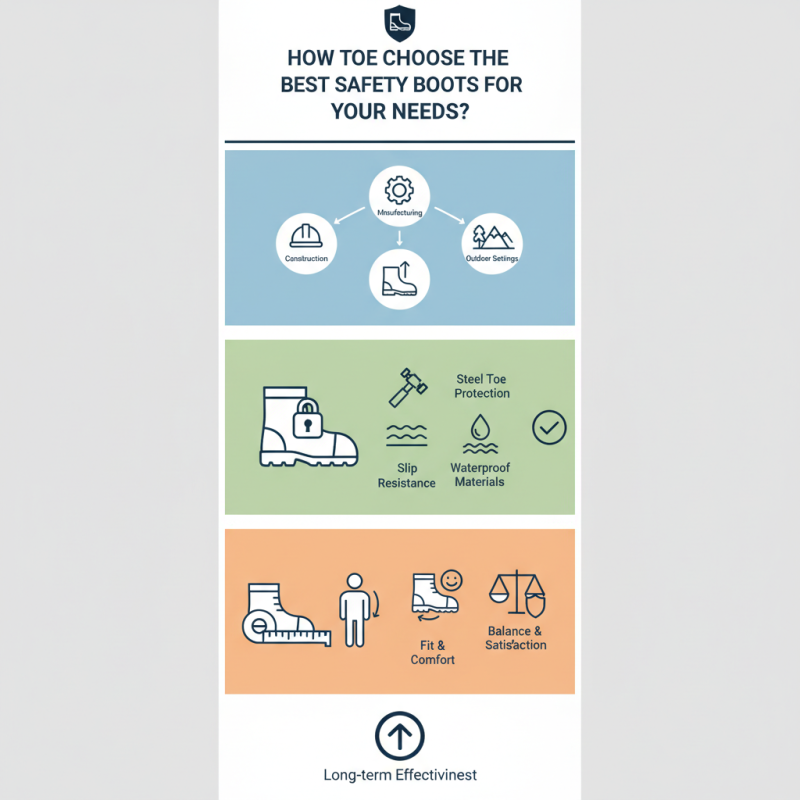
How to Choose the Best Safety Boots for Your Needs?

Understanding Different Types of Safety Boots Available on the Market

When selecting safety boots, it’s essential to understand the types available on the market. Some common types include steel-toe boots, composite-toe boots, and metatarsal guards. Steel-toe boots provide excellent protection against heavy impacts. Composite-toe boots are lighter and more resistant to electrical hazards. Each type serves a unique purpose, depending on your work environment.

Tips: Consider the specific hazards present in your job. If you work around heavy machinery, steel-toe boots might be necessary. If your work environment is wet, look for water-resistant options.

Don’t forget the fit. Safety boots should be snug but not too tight. An improper fit can lead to discomfort and distraction during work. Regularly assess the condition of your boots. Worn-out footwear can compromise safety.

Tips: A comfortable pair can make a huge difference. Try boots on at the end of the day when your feet are slightly swollen. This ensures a proper fit.

Evaluating Safety Standards and Certifications for Boots

When selecting safety boots, understanding safety standards and certifications is crucial. The right footwear must meet specific requirements set by recognized organizations. These standards address factors like impact resistance, slip hazards, and puncture protection. Knowing these criteria helps ensure your safety in various work environments.

Look for certifications like ASTM or ISO. These indicate that the boots have been tested and comply with rigorous safety measures. Additionally, consider the environment where you will wear these boots. Some workplaces require waterproof materials, while others may need heat-resistant features. Reflecting on your daily tasks will guide you in making informed choices.

Fitting is another important aspect. A proper fit will enhance safety and comfort. However, not all well-fitting boots are created equal. Some may become uncomfortable after long hours. It’s essential to consider long-term wear. Analyze feedback from other users and take time to try different options. This process may reveal insights into potential shortcomings in comfort or performance.

Assessing Comfort and Fit for Long-Term Wear

When selecting safety boots, comfort and fit are paramount. Poorly fitting boots can lead to discomfort and injury. Therefore, it's crucial to try on boots with the correct socks. Ensure there’s enough space in the toe area while maintaining a snug fit around the heel. A good fit reduces fatigue, especially for long hours of wear.

Consider the shape and structure of your foot. Everyone's feet have unique contours. Some may require arch support; others might need extra cushioning. Walk around the store to gauge how they feel. Pay attention to any pressure points or tight areas. An uncomfortable boot can lead to blisters and soreness.

It’s vital to remember that comfort can change over time. A new boot may feel perfect initially but can become uncomfortable as you wear it. Regularly assessing your boots is essential. If they begin to pinch or cause pain, it might be time for a change. Prioritizing comfort and fit will significantly enhance your experience on the job.

Choosing the Right Material for Your Environment and Job

When selecting safety boots, the material is crucial for both protection and comfort. Leather is highly regarded for its durability and resistance to abrasions. According to a recent report by the Occupational Safety and Health Administration (OSHA), leather boots can last up to three times longer than synthetic options in rugged environments. However, not all leather is created equal; some types may not offer adequate breathability or moisture resistance.

Meanwhile, composite materials are gaining traction. They are lighter and often non-metallic, making them ideal for those working in environments where metal detectors are utilized. A study by the National Safety Council indicates that composite boots provide effective thermal insulation. However, they may sacrifice some puncture resistance compared to steel-toe boots. This trade-off demands careful consideration based on job specifics and environmental factors.

Rubber is another material gaining attention, especially in wet or hazardous conditions. Its waterproof nature protects against liquids and contaminants. Yet, rubber boots can cause overheating and discomfort during extended wear. Understanding the unique pros and cons of each material is essential for making the right choice. Many individuals overlook these details, leading to long-term discomfort or injury. Reflecting on these aspects can guide you toward a safer work experience.

Considering Additional Features for Enhanced Protection and Functionality

Choosing safety boots is more than just style. Added features can enhance protection and functionality. Look for toe protection. Steel or composite toe caps can withstand heavy impacts. A report by OSHA states that proper footwear can reduce injuries by up to 60%.

Consider slip resistance as well. This is crucial for slippery work environments. A good tread pattern and material can improve traction. The National Safety Council highlights that slips and falls account for a significant percentage of workplace injuries.

Comfort is vital for productivity. Boots should be lightweight and breathable. Inadequate cushioning can lead to foot pain or fatigue. There is a balance to strike between safety and comfort. Always evaluate features based on your specific needs.

**Tip:** test boots in your work environment before purchasing. **Tip:** prioritize features that improve your daily tasks. **Tip:** seek reviews from workers in similar industries for insights. Make an informed choice for the best protection.

How to Choose the Best Safety Boots for Your Needs?

Feature Description Importance Recommended Use
Steel Toe Cap Provides protection against falling objects Essential for construction and industrial work Construction sites, warehouses
Slip Resistance Reduces the risk of slipping on wet or oily surfaces Crucial for safety in hospitality and outdoor environments Kitchen, outdoor work, factories
Waterproof Keeps your feet dry in wet conditions Important for outdoor and wet work environments Gardening, construction, wet weather
Insulation Keeps feet warm in cold conditions Essential for outdoor work during winter Snow removal, outdoor construction
Puncture Resistance Helps protect against sharp objects on the ground Critical for construction and landscaping work Construction sites, gardening
Breathability Allows moisture and heat to escape, keeping feet comfortable Important for long hours of wear Any profession with prolonged standing

Article Source:

Contact Details

Address:

Solar Pump Solutions,
Borrisokane, Co. Tipperary, Ireland.

Phone:

+353 86 1216312

Email:

sale@desasolar.com

Connect with us

Scroll to Top
Solar Pump Solutions
Privacy Overview

This website uses cookies so that we can provide you with the best user experience possible. Cookie information is stored in your browser and performs functions such as recognising you when you return to our website and helping our team to understand which sections of the website you find most interesting and useful.