How to Choose Hybrid Energy Storage Solutions in 2026?
Choosing the right Hybrid Energy Storage Solutions is no longer a simple battery comparison. In 2026, energy buyers must balance cost, resilience, safety, and future expansion. These systems combine different storage technologies, such as lithium-ion batteries, flow batteries, or thermal storage. Each option behaves differently under heat, rapid cycling, and changing electricity prices. The right design must match the site, not just the product brochure. Start with reality.
A credible evaluation begins with measured energy demand and documented operating conditions. Engineers should compare round-trip efficiency, usable capacity, response time, degradation, and maintenance requirements. Site measurements matter more than assumptions. A warehouse may need short, frequent discharge cycles. A rural clinic may value backup duration above peak efficiency. Small details matter. Certified installers should verify electrical protection, ventilation, fire safety, and grid-interconnection requirements. Manufacturer warranties and independent test reports can strengthen confidence, but they require careful reading.
This guide examines how to select Hybrid Energy Storage Solutions using practical and evidence-based criteria. It considers project goals, technology compatibility, lifecycle costs, software controls, and supplier reliability. No single chemistry fits every application. That sounds obvious. Yet buyers sometimes prioritize the lowest purchase price and overlook replacement schedules or thermal management. Some assumptions may fail when real demand changes. We acknowledge that uncertainty instead of hiding it. Readers should challenge performance claims, request site-specific calculations, and consult qualified professionals. Good storage decisions come from transparent data, field experience, and disciplined review.
What Hybrid Energy Storage Solutions Are and How They Work
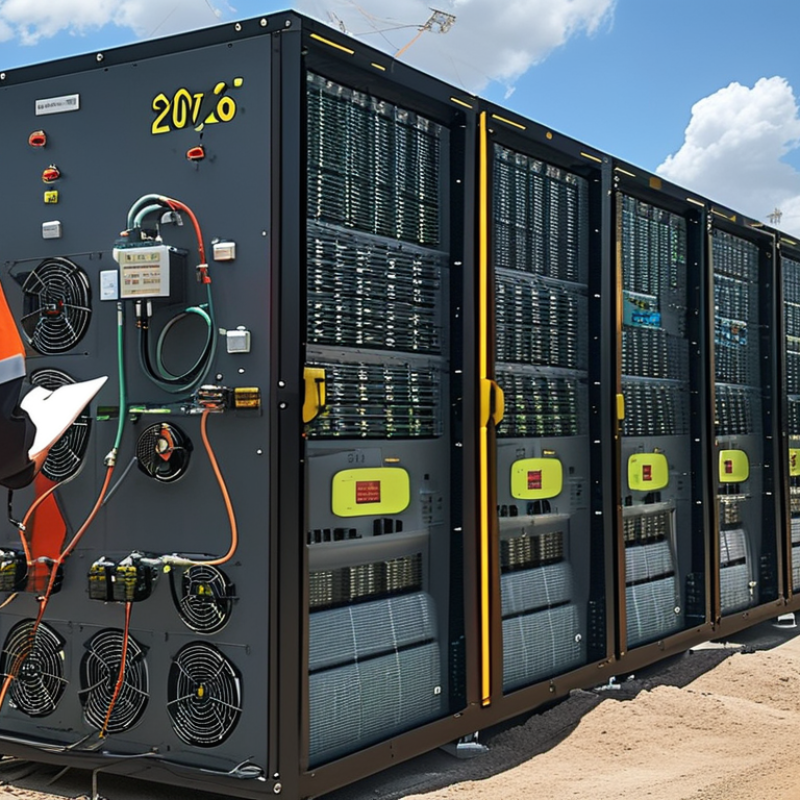
Hybrid energy storage solutions combine two or more storage technologies in one coordinated system. A lithium battery can respond within milliseconds, handling sudden power changes and short peaks. A flow battery, thermal store, or hydrogen system can support longer periods. Together, they balance speed, capacity, cost, and system life.
A site controller decides which storage unit should operate. During a cloudy afternoon, the battery may smooth solar output every few seconds. The longer-duration unit can then supply energy after sunset. Sensors track temperature, charge levels, electricity prices, and demand. Field assessments often show that control software matters as much as hardware. A well-sized system can still perform poorly with weak monitoring or unclear operating limits. That is an uncomfortable detail, but it deserves attention.
Tips: Map your load in fifteen-minute intervals. Separate brief peaks from overnight demand. Check round-trip efficiency, response time, safety controls, maintenance access, and replacement schedules. Ask for measured performance data, not only projected figures. Leave room for uncertainty; weather, tariffs, and equipment aging rarely follow a perfect model.
When choosing a solution in 2026, compare the storage mix with your actual operating pattern. Batteries may suit fast cycling, while thermal or chemical storage may support longer discharge periods. Modular designs can reduce future disruption. However, adding technologies also increases control complexity. A pilot installation can reveal unexpected losses, noise, heat, or space requirements before full deployment. The best choice is not always the most advanced one.
How to Define Your Energy Storage Needs and Operating Goals
Choosing a hybrid energy storage system starts with defining the operating problem, not selecting equipment. Record site demand in five-minute intervals for at least twelve months. Identify evening peaks, outage exposure, and renewable curtailment. A cold-storage facility may need steady discharge overnight, while a workshop may need short bursts for motor starting.
Separate power from energy. Power, measured in kilowatts, handles sudden loads. Energy, measured in kilowatt-hours, determines how long support lasts. Define minimum backup duration, allowable state of charge, daily cycles, and response time. Then set priorities: lower demand charges, improve resilience, absorb solar generation, or provide grid services. These goals can conflict. A battery sized for resilience may remain partly unused most days.
The International Energy Agency’s Batteries and Secure Energy Transitions report states that global energy storage capacity must increase sixfold by 2030, reaching about 1,500 GW. That growth makes disciplined planning more important. The National Renewable Energy Laboratory’s Storage Futures Study also shows that storage value depends heavily on duration, cycling, and market conditions. Do not assume a longer-duration device is always better. It may cost more while solving the wrong problem. Test operating scenarios with actual weather, tariffs, outages, and load data. Leave room for uncertainty. Real buildings rarely behave like spreadsheets.
How to Compare Battery, Thermal, Hydrogen, and Other Storage Technologies
How to Choose Hybrid Energy Storage Solutions in 2026?
Comparing storage technologies requires more than checking capacity and purchase price. Battery systems respond quickly, making them useful for frequency control, daily shifting, and short outages. Thermal storage can be cheaper for heating or cooling loads, especially when tanks and insulated pipes fit the site. Hydrogen offers longer-duration potential, but conversion losses, water needs, and safety requirements demand careful engineering. Other options, such as pumped storage or compressed air, may suit large sites with suitable geography.
Real project experience shows that operating conditions often matter more than laboratory ratings. Compare round-trip efficiency, response time, usable capacity, degradation, maintenance, land use, and replacement schedules. Measure the load profile in fifteen-minute intervals, including seasonal peaks and unexpected shutdowns. A battery may perform well for four hours, while thermal storage could reduce a building’s cooling peak overnight. Hydrogen may become valuable when backup power must last several days. Still, assumptions about future fuel prices can be unreliable.
Tips: Build one model using conservative data. Test high-demand and low-renewable scenarios. Ask suppliers for verified performance data, warranty limits, fire protection details, and end-of-life plans. Include permitting, workforce training, and connection costs. I once treated efficiency as the leading factor, but that view was incomplete. A slightly less efficient system may prove stronger when maintenance access is easy and local heat demand is predictable. Get an independent review. Small errors grow quickly.
| Comparison Dimension | Lithium-Ion Battery | Flow Battery | Thermal Energy Storage | Hydrogen Storage | Pumped-Storage Hydropower | Compressed-Air Energy Storage |
|---|---|---|---|---|---|---|
| Primary Storage Medium | Electrochemical cells | Electrolytes stored in external tanks | Heat stored in a solid, liquid, or phase-change medium | Hydrogen produced by electrolysis and stored as compressed gas, liquid, or in underground formations | Water held at an elevated reservoir | Compressed air stored in tanks, caverns, or suitable geological formations |
| Typical Discharge Duration | Approximately 1–8 hours | Approximately 4–12 hours; longer durations are possible by increasing tank size | Several hours to multiple days, depending on the thermal load and insulation | Many hours to seasonal storage | Approximately 6–20 hours; some reservoirs provide longer multi-day operation | Approximately 4–24 hours, with site-specific designs supporting longer periods |
| Electricity-to-Electricity Round-Trip Efficiency | Approximately 85–95% | Approximately 65–85% | Approximately 30–60% when heat is converted back to electricity; direct heat delivery can exceed 80% | Approximately 25–45% | Approximately 70–85% | Approximately 40–70%, depending on whether heat is recovered |
| Response Time | Milliseconds to seconds | Seconds to minutes | Minutes to hours for electricity output; immediate to minutes for direct thermal delivery | Minutes to hours, depending on electrolyzer, storage, and generation equipment | Seconds to minutes | Minutes to several hours, depending on plant configuration |
| Typical Power Rating | From hundreds of kilowatts to hundreds of megawatts | From hundreds of kilowatts to tens of megawatts | From small industrial systems to large heat-storage plants | From industrial-scale systems to large power-and-fuel projects | Usually tens of megawatts to several gigawatts | Usually tens to hundreds of megawatts |
| Cycle Life and Calendar Life | Commonly about 3,000–10,000 full cycles; calendar life often 10–20 years with controlled operation | Often more than 10,000 cycles; calendar life commonly 15–25 years, subject to membrane and pump maintenance | Many thousands of cycles are possible; service life is mainly affected by thermal degradation, corrosion, insulation, and mechanical equipment | Storage vessels and underground storage can have long service lives; electrolyzers and fuel-cell or turbine equipment require periodic replacement | Often 40–80 years for civil infrastructure, with machinery refurbishment over time | Often 30–50 years for major plant infrastructure, subject to cavern, vessel, and turbomachinery conditions |
| Energy Density | High relative to most stationary storage technologies | Low to moderate; energy capacity is largely determined by tank volume | Low to moderate by volume, but often economical where heat demand is located near the storage system | Low by volume as a gas at moderate pressure; higher with high-pressure, liquid, or geological storage | Very low by land area and elevation requirements; site geometry is decisive | Low to moderate; geological storage can provide large capacity with a relatively small surface footprint |
| Best Operating Duration | Short-duration balancing, frequency regulation, peak shaving, and solar shifting | Medium-duration renewable shifting and repeated daily cycling | Industrial heat, district heating, building heating, and long-duration heat shifting | Multi-day, seasonal, heavy transport, industrial feedstock, and backup generation | Daily load shifting, ancillary services, and long-duration bulk storage | Multi-hour to multi-day bulk storage and renewable integration |
| Site Requirements | Relatively flexible; requires fire protection, thermal management, grid connection, and suitable foundations | More land and tanks than lithium-ion systems; requires pumps, pipes, and chemical handling systems | Requires proximity to a heat source or heat demand, suitable insulation, and appropriate thermal materials | Requires electricity or low-carbon hydrogen production, storage infrastructure, safety zones, and end-use equipment | Requires suitable elevation difference, water availability, reservoirs, transmission access, and extensive permitting | Requires suitable geology or large pressure vessels, compressors, expanders, and transmission access |
| Safety Considerations | Thermal runaway prevention, fire detection, spacing, ventilation, and emergency response planning | Electrolyte containment, corrosion control, pump safety, and chemical handling | High-temperature surfaces, pressure management, material degradation, and hot-fluid containment | Leak detection, ventilation, ignition control, embrittlement management, and separation distances | Dam safety, flood management, water management, and geological stability | High-pressure equipment, rotating machinery, air quality, and geological integrity |
| Environmental Considerations | Material extraction, manufacturing emissions, recycling, and end-of-life management | Electrolyte composition, tank materials, water use, and recycling or treatment requirements | Material sourcing, land use, heat losses, and potential impacts from heat-transfer media | Emissions depend on hydrogen production pathway; water use and leakage management are important | Land transformation, ecosystem effects, water use, and construction impacts | Geological disturbance, construction impacts, and possible natural-gas use in some legacy configurations |
| Main Strength | High efficiency, fast response, modular deployment, and broad commercial availability | Long cycle life, low degradation with deep cycling, and independent sizing of power and energy | Can be highly economical for storing and delivering heat directly | Very long storage duration and the ability to serve power, industrial, and transport markets | Large capacity, long asset life, and established grid-scale operating experience | Large-scale storage potential with long duration and lower dependence on electrochemical materials |
| Main Limitation | Degradation, thermal-management requirements, fire risk, and higher cost for very long durations | Lower energy density, higher balance-of-plant complexity, and electrolyte or membrane costs | Usually not suitable for fast electrical response unless combined with a power-generation system | Low electricity round-trip efficiency, infrastructure requirements, and conversion losses | Limited by geography, permitting time, water conditions, and high upfront civil works | Limited suitable geology, lower efficiency than batteries, and complex turbomachinery |
| Strong Hybrid Pairings | Battery plus thermal storage; battery plus hydrogen; battery plus pumped hydro | Flow battery plus lithium-ion; flow battery plus thermal storage | Thermal storage plus battery; thermal storage plus heat pump; thermal storage plus hydrogen for industrial heat | Hydrogen plus battery; hydrogen plus renewable generation; hydrogen plus thermal storage | Pumped hydro plus battery; pumped hydro plus hydrogen; pumped hydro plus renewable generation | Compressed air plus battery; compressed air plus thermal recovery; compressed air plus renewable generation |
| Recommended Selection Priority | Choose when response speed, compact footprint, and high electrical efficiency are priorities | Choose when frequent deep cycling and longer daily duration are more important than compactness | Choose when the main requirement is heat rather than electricity, especially near industrial or district heat demand | Choose when storage must cover multiple days or seasons and hydrogen has a credible low-carbon end use | Choose when a suitable site exists and long service life and bulk capacity justify the civil works | Choose when suitable geology is available and long-duration bulk storage is required at scale |
Planning note: A hybrid system should assign each technology to the duty it performs best. Fast batteries can manage short-term fluctuations, thermal storage can absorb heating or cooling demand, and hydrogen, pumped hydro, or compressed air can cover longer-duration requirements.
Data note: Efficiency, duration, cycle-life, and cost outcomes vary substantially by configuration. For a bankable comparison, evaluate the complete system boundary, including charging equipment, power conversion, auxiliary loads, degradation, replacement schedules, land, interconnection, safety systems, and decommissioning.
How to Evaluate System Sizing, Integration, Safety, and Performance
How to Choose Hybrid Energy Storage Solutions in 2026?
Choosing a hybrid energy storage solution in 2026 starts with measured system sizing. Use interval load data, not a single peak-demand reading. Map daily energy, short surges, seasonal changes, and backup duration. A battery may handle evening demand, while a fast-response unit manages sudden motor starts. Size each resource for its real duty cycle. Oversizing appears safe, but it can reduce utilization and increase cost. Undersizing creates thermal stress and disappointing autonomy. I have seen designs fail because normal loads were measured carefully, while startup currents were ignored. That mistake remains common.
Integration requires more than matching voltage and power ratings. Check communication protocols, inverter limits, protection settings, grounding, and control response. The energy management system should support predictable dispatch, safe state-of-charge limits, and graceful fallback operation. Test transitions between grid-connected, islanded, and recharge modes under realistic loads. A clean diagram is not proof of compatibility. Commissioning records, alarm histories, and witnessed tests provide stronger evidence. Leave room for firmware changes and sensor drift. This is easy to overlook.
Safety evaluation should cover thermal propagation, enclosure ventilation, fire detection, isolation, and emergency access. Use recognized standards and local authority requirements, then verify installation details in the field. Performance claims need defined conditions, including temperature, depth of discharge, response time, round-trip efficiency, and available capacity. Compare measured results with contractual thresholds. Do not treat laboratory figures as guaranteed site performance. Maintenance access also affects reliability; difficult sensor replacement may delay recovery. I would challenge any design without a clear failure-mode review. Some assumptions will be wrong. Build testing around that fact.
How to Assess Costs, Regulations, Maintenance, and Long-Term Value
Article Source:
Contact Details
Address:
Solar Pump Solutions,
Borrisokane, Co. Tipperary, Ireland.