
2026 Best Solar Battery Box for Global Buyers?
Choosing the 2026 best Solar Battery Box requires more than comparing prices or attractive specifications. Global buyers need practical protection for lithium, LiFePO4, or other approved battery systems. A reliable enclosure should manage heat, moisture, dust, cable entry, and accidental impact. It should also match the battery’s dimensions, voltage, ventilation needs, and installation environment.
Real-world performance matters. A box installed beside a coastal home faces salt air, humidity, and strong sunlight. A unit used in a dry warehouse may need different protection. Look for verified IP ratings, fire-resistance information, corrosion-resistant materials, and clear temperature limits. Manufacturer test reports and independent certification can provide stronger evidence than marketing language. Local installers may also reveal problems that product brochures omit.
Specifications can mislead.
The best choice depends on the complete energy system, not the enclosure alone. Buyers should check inverter compatibility, battery access, grounding arrangements, maintenance space, warranty conditions, and replacement-part availability. International purchasing adds further concerns, including documentation quality, shipping damage, regional electrical requirements, and after-sales support.
No single model fits every market. That is the uncomfortable truth. Some products appear highly durable but offer limited evidence from long-term field use. Others provide excellent protection yet cost more than necessary for mild climates. This guide evaluates leading options through documented features, practical installation experience, safety considerations, and buyer feedback. It also highlights weaknesses, because honest comparison should explain where a Solar Battery Box may fail, not only where it performs well.
What Is a Solar Battery Box and How Does It Work?
What Is a Solar Battery Box and How Does It Work?
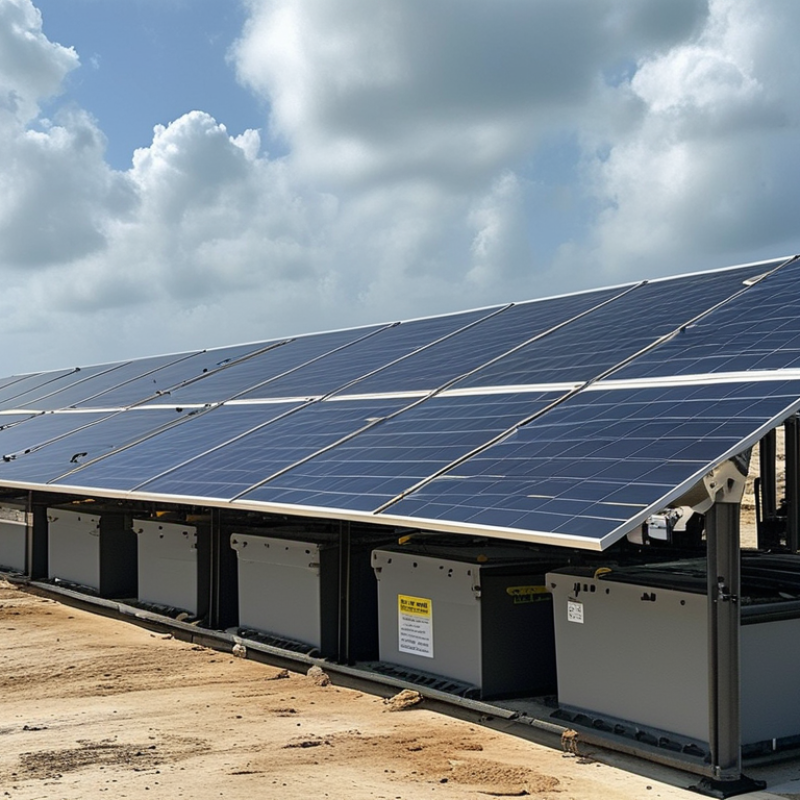
A solar battery box is a protected cabinet that stores electricity from photovoltaic panels. It commonly contains battery modules, a battery management system, fuses, contactors, and thermal controls. Some systems also include an inverter. The box receives variable DC power, balances cell voltage, and stores energy for later use. During evening hours, it sends controlled power to household loads or the electrical grid.
The operating sequence is practical. Solar panels charge the battery through a charge controller or hybrid inverter. The management system monitors voltage, temperature, and state of charge. If a cell becomes unsafe, protection circuits disconnect the battery. AC-coupled boxes work beside an existing inverter. DC-coupled designs can reduce conversion steps, but installation is less flexible. Small details matter.
The International Energy Agency reported that global battery storage capacity may need to increase fourteenfold by 2030, reaching about 1,200 GW in its net-zero pathway. This growth makes enclosure safety and serviceability increasingly important. NREL research commonly places lithium-ion round-trip efficiency near 85% to 95%, depending on system design and operating conditions. Buyers should check usable capacity, not only the advertised capacity. A 10 kWh label may deliver less after reserve limits and conversion losses. Temperature range, IP rating, fire protection, local certification, and grid compatibility also require verification. No box is universally best. Some specifications still look impressive but perform poorly in humid, dusty, or cold environments.
2026 Best Solar Battery Box for Global Buyers? - What Is a Solar Battery Box and How Does It Work?
| Evaluation Dimension | Typical Specification or Range | What It Means | Global Buyer Consideration |
|---|---|---|---|
| Definition | Protective enclosure containing a rechargeable battery and battery-management electronics | Stores electricity generated by solar panels for later use | Confirm whether the product is a complete battery system or only an empty enclosure |
| Common Battery Chemistry | Lithium iron phosphate (LiFePO4) or lead-acid | LiFePO4 generally offers higher usable capacity, longer cycle life, and lower weight; lead-acid is usually heavier and requires stricter charging practices | Check local transport, recycling, and installation requirements for the selected chemistry |
| Nominal System Voltage | 12 V, 24 V, or 48 V DC | The voltage level used by the battery and compatible power electronics | Match the battery voltage with the inverter, charge controller, and DC appliances |
| Typical Usable Energy | Approximately 0.5–2 kWh for portable units; 5–20 kWh for residential systems | The approximate energy available for loads after recommended operating limits | Estimate daily consumption and include reserve capacity for cloudy weather or outages |
| Usable Depth of Discharge | About 80–95% for many LiFePO4 systems; about 50% is commonly recommended for lead-acid batteries | The portion of rated battery capacity that can normally be used without excessive wear | Compare usable kilowatt-hours rather than rated capacity alone |
| Continuous Output Power | Approximately 300 W–5,000 W, depending on system size | The power that can be delivered continuously to connected equipment | Select sufficient output for refrigerators, pumps, tools, or other high-demand loads |
| Peak or Surge Output | Often 1.5–3 times the continuous rating for a short period | Handles short startup surges from motors and compressors | Verify surge duration and wattage, not just the headline continuous rating |
| Solar Charging Input | Approximately 100–4,000 W, depending on the charge controller and battery size | The maximum solar power that can be accepted for charging | Check maximum PV voltage, current, connector type, and charge-controller compatibility |
| Charging Methods | Solar panels; some systems also support AC grid charging or vehicle charging | Allows energy to be replenished from one or more available sources | Confirm regional AC voltage and frequency before using grid charging |
| Battery Management System | Overcharge, over-discharge, overcurrent, short-circuit, and temperature protection | Monitors battery conditions and disconnects the system when unsafe limits are reached | A BMS is essential for lithium batteries; review protection limits and reset behavior |
| Round-Trip Efficiency | Approximately 80–95%, depending on chemistry, inverter, temperature, and operating load | The percentage of energy recovered after charging and discharging | Use independently tested values when calculating long-term energy savings |
| Cycle Life | About 2,000–6,000 cycles for many LiFePO4 products; lower for many lead-acid products | The number of charge and discharge cycles before capacity declines to a specified level | Check the test depth of discharge, temperature, cycle conditions, and end-of-life capacity |
| Operating Temperature | Commonly around 0–45 °C for charging and −20–55 °C for discharging; varies by design | The temperature range in which the battery can operate safely | Cold-weather charging may require low-temperature protection or battery heating |
| Enclosure Protection | Indoor units may have limited protection; outdoor models commonly target IP54–IP65 | An IP rating indicates resistance to solid particles and water under defined test conditions | Do not place an indoor-rated box outdoors; confirm protection against dust, rain, and condensation |
| Cooling and Ventilation | Passive cooling, fan-assisted cooling, or thermal management system | Controls heat generated during charging and discharging | Leave the manufacturer-required clearance and avoid enclosed areas without ventilation |
| Communication Features | LED display, Bluetooth, Wi-Fi, CAN bus, or RS485 on selected models | Provides information about state of charge, voltage, current, temperature, and alarms | Check language support, connectivity availability, cybersecurity, and data privacy requirements |
| Installation Format | Portable, wall-mounted, floor-standing, or rack-mounted | Determines how the battery box is positioned and integrated into a power system | Measure available space, cable routes, mounting surface, and access for maintenance |
| Safety and Certification | Relevant requirements may include IEC, UN 38.3, CE, UL, or local electrical standards | Certifications and test reports address transport, electrical safety, electromagnetic compatibility, or installation requirements | Requirements differ by destination, application, and grid connection; request current documentation |
| How It Works | Solar panels produce DC electricity → charge controller regulates charging → battery stores energy → inverter supplies AC loads | The battery box balances energy production and demand over time | Ensure every component has compatible voltage, current, connectors, and control protocols |
| Best General Use Case | Emergency backup, off-grid cabins, remote equipment, mobile power, and solar self-consumption | Provides stored power when sunlight is insufficient or the grid is unavailable | Choose capacity and output according to actual loads, local climate, and backup duration |